Brad Jersak's A More Christlike God: A More Beautiful Gospel (CWR Press, 2015) can now be pre-ordered at https://www.ptm.org/uni/resources/order/form_christlike.php
Please consider sharing the video trailer for the book:
A More Christlike God – A More Beautiful Gospel from Plain Truth Ministries on Vimeo.

"Christ did not bring religion; Christ brought the Kingdom of God." Fr. Alexander Schmemann
Tuesday, March 31, 2015
Wednesday, March 25, 2015
If You Had Only Known What Would Bring You Peace - Greg Albrecht
After Jesus had said this, he went on ahead, going up to Jerusalem. As he approached Bethphage and Bethany at the hill called the Mount of Olives, he sent two of his disciples, saying to them, "Go to the village ahead of you, and as you enter it, you will find a colt tied there, which no one has ever ridden. Untie it and bring it here. If anyone asks you, 'Why are you untying it?' tell him, 'The Lord needs it.'"Those who were sent ahead went and found it just as he had told them. As they were untying the colt, its owners asked them, "Why are you untying the colt?"They replied, "The Lord needs it."They brought it to Jesus, threw their cloaks on the colt and put Jesus on it. As he went along, people spread their cloaks on the road.When he came near the place where the road goes down the Mount of Olives, the whole crowd of disciples began joyfully to praise God in loud voices for all the miracles they had seen:
"Blessed is the king who comes in the name of the Lord! Peace in heaven and glory in the highest!"
Some of the Pharisees in the crowd said to Jesus, "Teacher, rebuke your disciples!"
"I tell you," he replied, "if they keep quiet, the stones will cry out."As he approached Jerusalem and saw the city, he wept over it and said, "If you, even you, had only known on this day what would bring you peace—but now it is hidden from your eyes. The days will come upon you when your enemies will build an embankment against you and encircle you and hem you in on every side. They will dash you to the ground, you and the children within your walls. They will not leave one stone on another, because you did not recognize the time of God's coming to you.—Luke 19:28-44

Late March or early to mid-April is usually the time when we celebrate the twin Sundays—Palm Sunday and Easter. Luke 19:28-44 describes the background of what has come to be known as Palm Sunday. This day, and events of the week that follow, serve to remind us of Jesus' entry into the city of Jerusalem, of the events of the last few days of his earthly life.
This week, often called Passion Week, is a study in contrasts. It begins with Jesus' "Triumphal Entry"—when he is welcomed by the crowds somewhat like a conquering military leader—and ends with Good Friday—the day of his crucifixion.
Hailed on Sunday as a king—crucified on Friday, along with two common criminals. This day, and this week is a time of contrast, a time of irony and of drama.

Friday, March 20, 2015
Can we 'make' God love us more or less? - Brad Jersak

"We need to let it soak in that there is nothing we can do to make God love us more…and nothing we can do to make God love us less." - Philip Yancey
"We all need to know that God does not love us because we are good; God loves us because God is good. Nothing humans can do will ever decrease or increase God's eternal eagerness to love." - Richard Rohr
I remember when I first heard these kind of statements and sort of cringed. I was suspicious that those who echoed Philip Yancey or Fr. Richard might employ them to imply, "So it doesn't matter what you do." I don't think I hear Jesus saying, "It doesn't matter what you do," and in fact, that's certainly not what Yancey or Rohr are implying either. I believe it's pretty obvious that God (through Christ and in these two fine teachers) wants us to love others and emulate his grace and mercy in our lives. That matters a lot! And it seems God has also made it clear that harming others, or judging and condemning them is something he'd want us to turn from as we grow up. Discovering God's infinite love for us isn't simply a green light for an "anything goes" attitude.
But implications and suspicions aside, the more I soak in the New Testament Gospels and epistles, and as I continue through to the early church fathers and mothers, the more I see how and why these opening aphorisms are exactly right.
First, consider the phrase, 'there's nothing you can do to make God.' This is absolutely true: no one can 'make God' do or be anything other than what he is. That is, God loves us with an infinite love, because God IS love ... but nothing in heaven or earth or under the earth can constrain God to love us or not love us. His love is what the ancient theologians called a 'self-donation.' We don't seduce his love by being either adorable or pathetic -- his love flows entirely from his nature and is utterly voluntary. He is "moved to compassion," not because we 'trigger' him or manipulate him with our pleas, but rather, because God is compassion itself and his love flows without ceasing wherever and to whomever it is received. My experience of God's love may fluctuate as I welcome it or rebuff it, but God himself cannot be said to love us more or less, as if his very nature was dependent on our behaviour or jerked around by our emotional rollercoaster rides.
Why not? Because for God to be God means that he is the infinite perfection of all we call goodness and love. God can't become more than perfect or more than infinite. God cannot become more loving or more God. If he could become 1% more, that would mean he's only 99% now ... and that would be 1% less than God. Get it? And he cannot become less in any way -- less God, less infinite, less love -- because that would diminish him. And to diminish God even 1% would mean he would no longer be the perfection of love -- would no longer be God.
Tuesday, March 17, 2015

Saturday, March 14, 2015
CWR Video Magazine is now online!
CWR Video Magazine is now online!
Brief (approx. 4 minute) videos with Brad Jersak, Greg Albrecht, Brian Zahnd, Steve McVey, Bruce Friesen, Lucy Peppiatt and Ed Dunn.
This episodes topics include 'Why did Jesus die?', Suffering, Law & Grace, Reconciliation and more.
CLICK HERE to access the site.

Brief (approx. 4 minute) videos with Brad Jersak, Greg Albrecht, Brian Zahnd, Steve McVey, Bruce Friesen, Lucy Peppiatt and Ed Dunn.
This episodes topics include 'Why did Jesus die?', Suffering, Law & Grace, Reconciliation and more.
CLICK HERE to access the site.
Monday, March 9, 2015
Coming Mar 15 - CWR video magazine!
Coming Sunday March 15—the first issue of our online video magazine! You won't want to miss the brief, concise, thought-provoking, informative and encouraging insights offered by our guests.

Sunday, March 8, 2015
Love Never Ends: A Meditation by Brian Zahnd
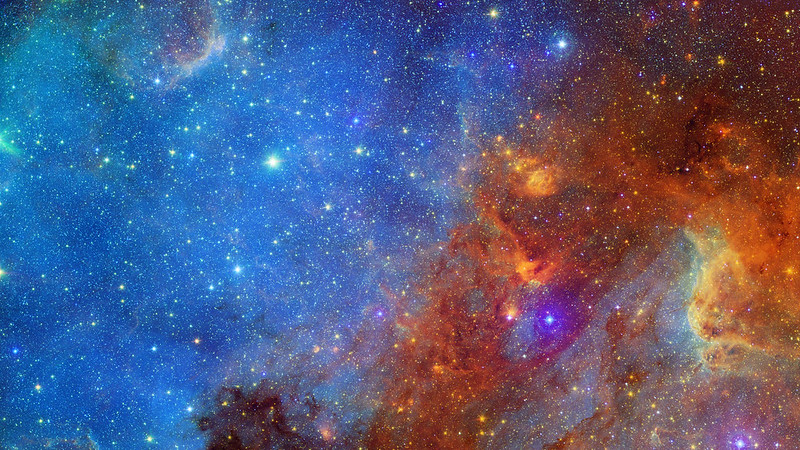
Why is there something instead of nothing?
The only answer I can imagine is Genesis 1:1. In the beginning God…
But why would God say, “Let there be light” and initiate Creation?
The only answer I can imagine is God is love.
What is light? God’s love in the form of photons.
What is water? A liquid expression of God’s love.
What is a mountain? God’s love in granite, so much older than human sorrow.
What is a tree? God’s love growing up from the ground.
What is a bull moose? God’s love sporting spectacular antlers.
What is a whale? Fifty tons of God’s love swimming in the ocean.
As we learn to see Creation as goodness flowing from God’s own love—
We begin to see the sacredness of all things.
As Dylan and Dostoevsky say, in every grain of sand.
All of creation is a gift — a gift flowing from the self-giving love of God.
Why is there light and oceans and trees and moose and whales and every grain of sand?
Because God is love — love seeking expression in self-giving creativity.
Unless we understand this we’ll misunderstand everything and misspend our lives.
In our misunderstanding and misspent lives we harm Creation—
Including our sisters and brothers, all of whom bear the image of God.
Love never ends.
At the end of all things there is love. Love abides. Love endures.
When the last star burns out, God’s love will be there for whatever comes after.
In the end it all adds up to love. So when you are calculating the meaning of life—
If it doesn’t add up to love, recalculate, because you’ve made a serious mistake!
Existence only makes sense when seen through the lens of love.
At the beginning of time there is love.
At the bottom of the universe there is love.
It’s in God’s ocean of endless love that we live and move and have our being.
Subscribe to:
Posts (Atom)